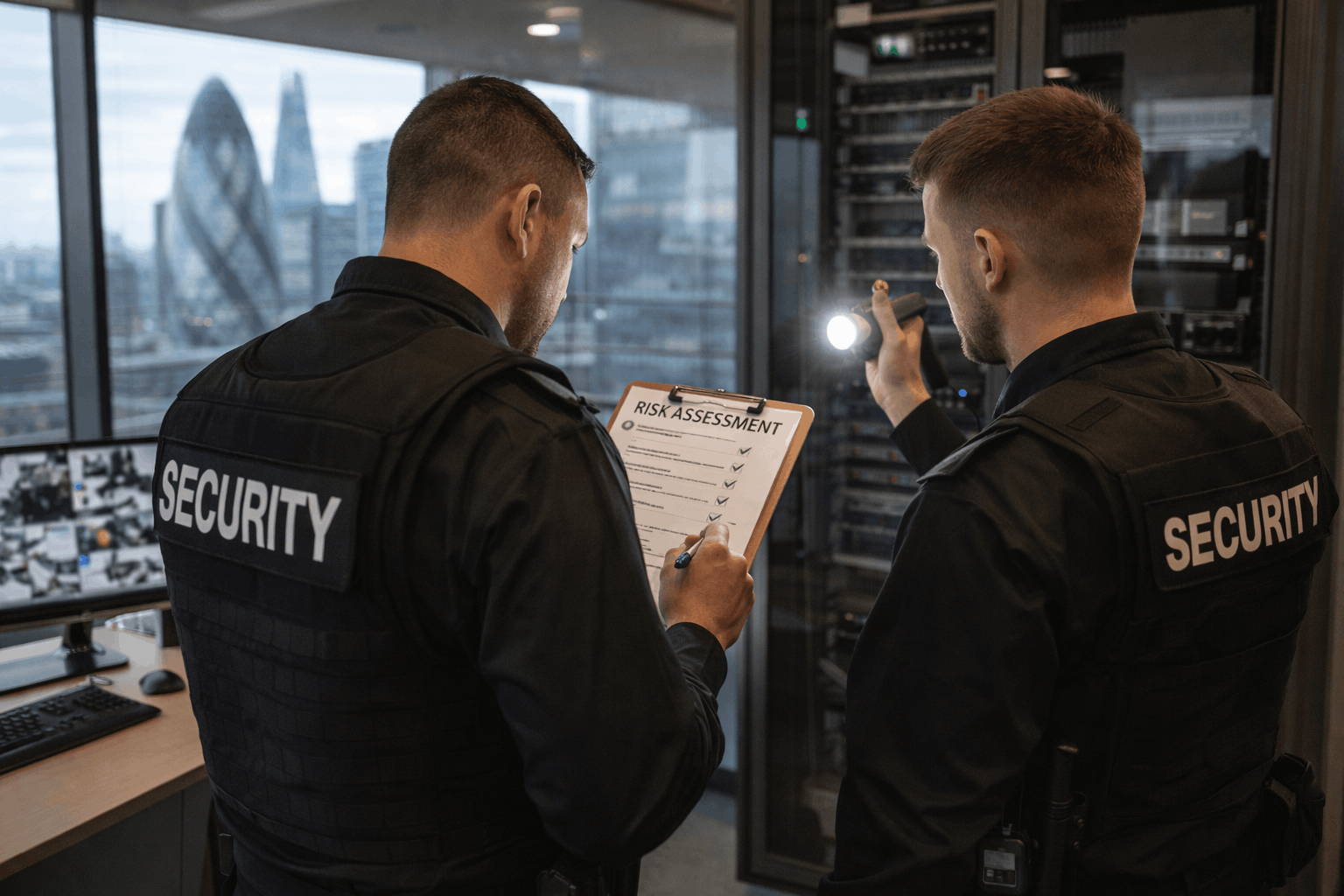
Free Security Risk Assessment Guide for London Businesses: How to Keep Your Company Safe?
Running a business in London is exciting. But whether you run a coffee shop in Shoreditch, an office in the City, or a warehouse in East London, there is one thing you cannot ignore: security.With so people coming and going, expensive equipment on-site, and valuable data on your computers, risks are everywhere. Many business owners make the mistake of thinking, "It won’t happen to me." But waiting for a break-in to happen before you think about safety is a bad idea.The best way to protect your business is to be proactive. You need to spot the problems before the bad guys do. It is where a security risk assessment comes in. It sounds technical, but it is actually quite simple. It is just a health check for your business’s safety.In this blog, we will explain exactly what this assessment is, why you need one, and give you a simple Risk Assessment Guide to help you get started.
What is a Security Risk Assessment?
A security risk assessment is a structured process used to identify potential threats to a business, property, or organisation, evaluate vulnerabilities, and implement measures to reduce the likelihood and impact of incidents. It is a step-by-step look at your business to find out:
What valuable things you have.
Who might want to steal or damage them.
How easy it would be for them to do it.
By answering these questions, you can fix the weak spots in your security before anyone takes advantage of them.
Why London Businesses Need to Be Extra Careful
London is different from a quiet village or a small town. The risks here are unique.
Lots of People: In London, hundreds of people might walk past your door every hour. It is easy for a thief to blend into a crowd.
High Value: London businesses often have expensive laptops, phones, and stock lying around.
Shared Buildings: Many offices in London share a main entrance with other companies. Do you know everyone who walks through that front door? Probably not.
If you don't have a plan, you are making it easy for criminals. That is why doing a security risk assessment is so important.
Your Simple 5-Step Risk Assessment Guide
You don’t need to be a security expert to start understanding your risks. You can do a basic check yourself. Use this simple risk assessment guide to walk around your business and see where you might be vulnerable.
Step 1: Identify Your Assets (What do you have?)
First, make a list of everything valuable. Security isn't just about locking the front door; it's about protecting what is inside.
Physical Items: Laptops, cash in the till, stock in the storeroom, tools, or delivery vans.
Data: Client lists, bank details, and private emails. If these are stolen, it can ruin your reputation.
People: Your staff and your customers. You have a legal duty to keep them safe.
Step 2: Identify the Threats (Who is the danger?)
Who might want to harm your business?
Thieves: People looking to steal expensive items to sell.
Vandals: People who might smash windows or spray graffiti just to cause trouble.
Fraudsters: People trying to trick your staff into giving away money or passwords.
Internal Threats: Sadly, sometimes staff members or cleaners might steal things if they think nobody is watching.
Step 3: Find the Vulnerabilities (Where are the weak spots?)
This is the most important part of your security risk assessment. You need to think like a criminal. Walk around your building and look for holes in your defence.
Is the back door left unlocked when staff go for a cigarette break?
Is the CCTV camera actually working, or is it just a dummy?
Is the car park dark and unlit at night?
How easy is it to copy the front door key?
Do your staff let strangers follow them through secure doors (this is called "tailgating")?
Step 4: Check the Impact (What happens if things go wrong?)
If someone did break in, how bad would it be?
Money: How much would it cost to replace the stolen laptops or fix the broken window?
Time: If your computers are stolen, can your staff still work? Or will you have to close for a week?
Trust: If a client's personal data is stolen, will they ever trust you again?
Step 5: Fix the Problems
Once you know the risks, you can fix them. Some fixes are free, like telling staff to lock their computer screens when they walk away. Other fixes might need professional help.For example, if you realise your warehouse is totally empty and unguarded at night, you might need a Mobile Patrol service to check on it. If you have a busy reception area where anyone can walk in, you might need a Concierge Security guard to check IDs.
Why You Might Miss Things (and Why Pros Help)
While the guide above is a great start, doing it yourself has one big problem: you are too used to your own building.When you walk through the same door every morning for five years, you stop noticing that the lock is a bit loose. You stop noticing that the fence has a hole in it. This is called "familiarity blindness."A professional security company, like Valmont Security, sees things differently. We look at your business with fresh eyes. During a professional security risk assessment, we might spot things you missed, like a window that can be pried open or a fire exit that doesn't close properly.
How Valmont Security Can Help You?
At Valmont Security, we know that every business in London is different. A small shop doesn't need the same security as a big bank. That is why we don't believe in "one-size-fits-all" solutions.If your assessment shows that you have a security gap, we can help you fill it without tying you into a long, expensive contract.
Flexible Help: Maybe you only need a guard for a few weeks while you have builders on-site. We can do that.
Real Experts: All our guards are SIA-licensed (which means they are fully trained and checked by the government).
Technology: We use GPS tracking so you can see exactly when our patrols checked your property.